

Before early access begins, most of your understanding regarding the playable content and quality of FIFA 27 likely stems from Closed Beta. While the beta reflected the game’s core mechanics, it also exposed several shortcomings.
To ensure the full game launches with as few issues as possible, these flaws need to be addressed either before FUT 27 goes live or within the first few days of its release.
Here, IGGM.com outlines the measures the development team plans to take regarding underlying gameplay logic bugs identified during Closed Beta, providing you with a helpful analysis of the feedback.
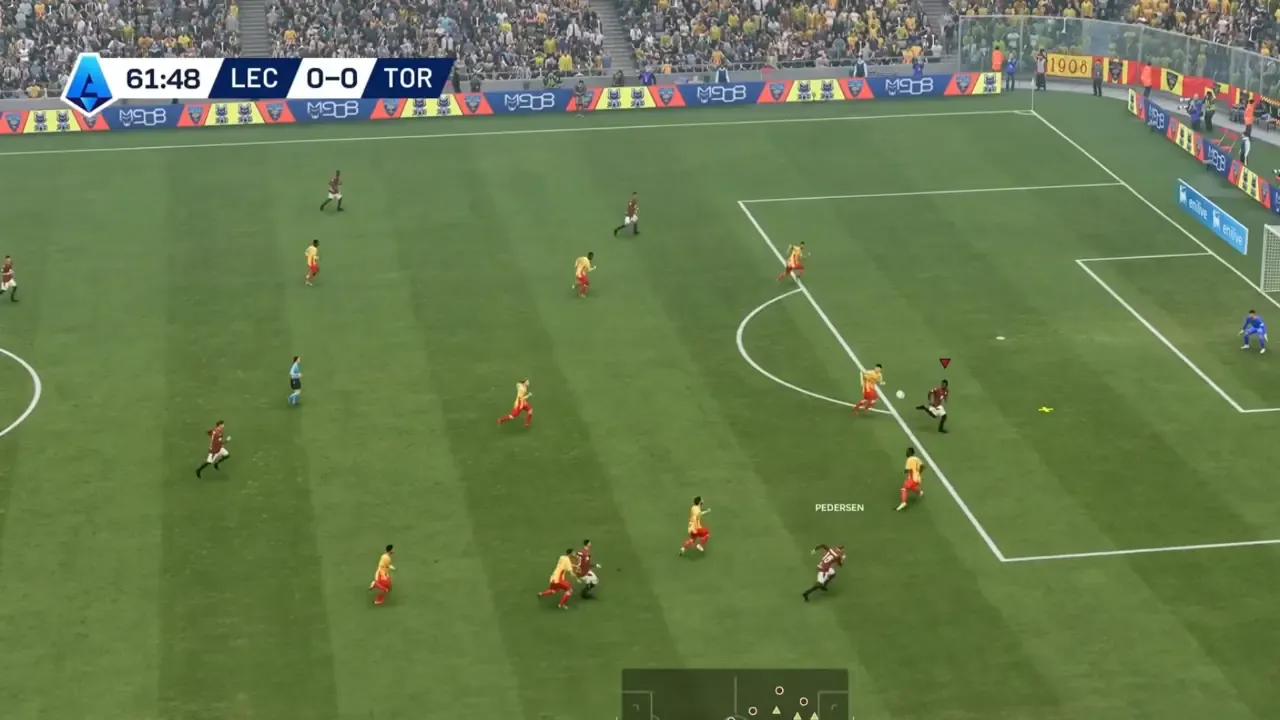
No premature balance adjustments
Before detailing specific optimizations, FUT 27 development team stated they would adopt a cautious approach to releasing patches; essentially, they do not intend to make major balance adjustments in the early updates following the game’s launch.
IGGM.com views this as a positive move, as it gives you time to familiarize yourself with and master FC 27. Meanwhile, developers can focus on fixing the most critical issues while leaving other aspects unchanged.
By addressing the most unbalanced mechanics one by one, FUT 27 could potentially establish a solid new foundation for the series, eliminating the need for drastic overhauls the following year.
Furthermore, in the weeks following FC 27 launch, players’ understanding of the game and their playstyles will evolve rapidly as they learn new mechanics, discover different strategies, and build their squads.
Rushing into large-scale balance changes based solely on early trends could disrupt the consistency of the gaming experience, making it difficult for you to formulate and execute a solid plan for farming FIFA coins.
However, the development team noted that fixing issues that severely impact the player experience might inevitably affect the game’s overall balance, so you should be prepared for that possibility.
Bruiser and shoulder challenges optimizations
During EA Sports FC 27 Closed Beta, physical battles and Bruiser Playstyle were hot topics; you likely wanted physical challenges to serve as an effective defensive tactic for winning the ball.
At the same time, physical play in attack should feel more rewarding and valuable. To address this, FUT 27 development team has made adjustments to stabilize shoulder-to-shoulder challenges and resolve some unintended exploits.
In competitive FIFA 27 matches, shoulder-to-shoulder challenges are most effective when your defender is running alongside the ball carrier, rather than attempting the challenge from behind.
Additionally, rapidly tapping the shoulder-to-shoulder button causes the defender to extend their arm and lose speed; consequently, spamming this action actually makes it harder to catch up to the opponent.
Physical defending remains effective in FUT 27, provided you maintain good positioning and time your tackles well. The strength attribute continues to play a crucial role, while Bruiser PlayStyle offers an added bonus.
Both the improved shoulder-to-shoulder mechanics and Bruiser PlayStyle are most effective when utilized by players who possess the relevant attributes with sufficiently high ratings.
Given that the pre-order bonuses consist primarily of FC Points, which are not distributed all at once, a better strategy is to buy FC 27 coins in advance. You can then use them to open packs and trade on the market to acquire reliable players for your starting lineup.
Team press and defensive depth optimizations
Team Press is designed to apply pressure high up the pitch, but in previous titles, it was overpowered when used near your own goal: whenever an opponent approached, activating Team Press allowed you to easily win the ball back.
This was largely because your AI teammates would automatically step up to press the opponent, shouldering most of the defensive workload for you.
To remedy this, Team Press will no longer function when the ball is in your defensive third, the area closest to your own goal.
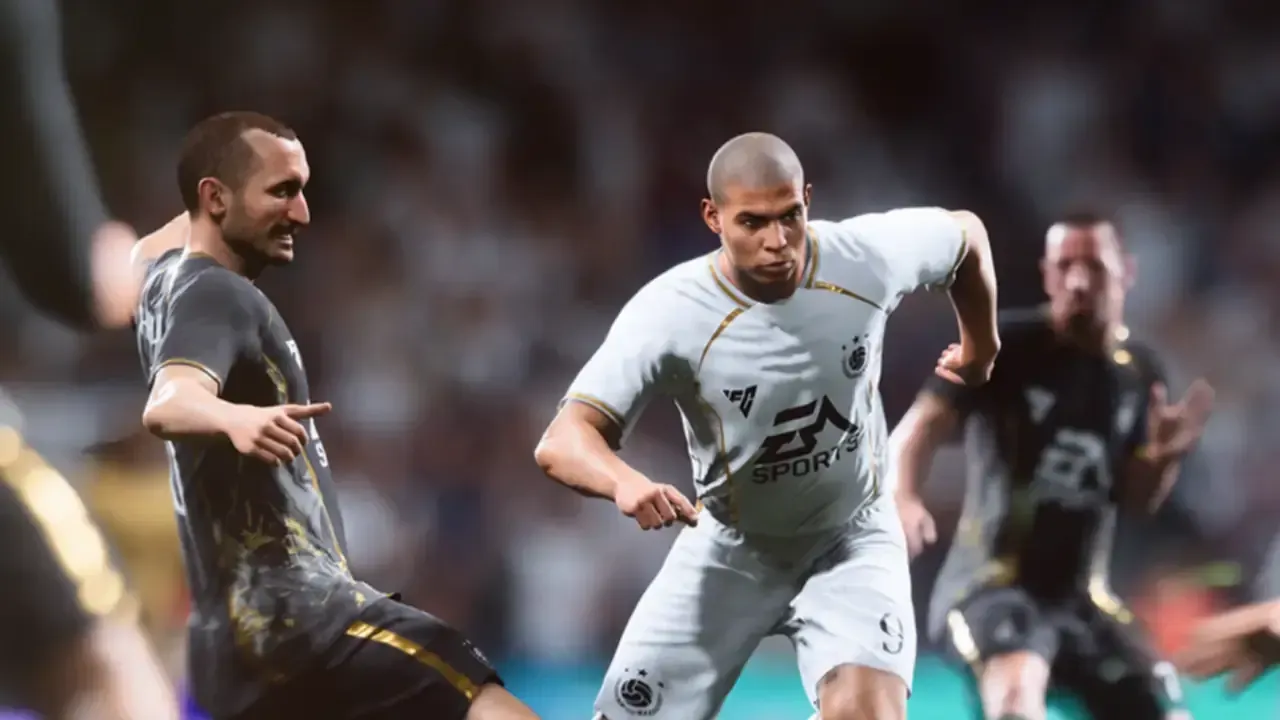
This directly addresses the most common exploit, using automatic pressure against attackers near the goal, and forces you to take greater personal responsibility for applying pressure.
Furthermore, with these changes, activating team press further up the pitch allows your defenders to move toward their assigned markers, though their pressing impact is less potent than that of midfielders and forwards.
Regarding defensive depth, an issue observed during Closed Beta was that the defensive line would often sit higher up the pitch than intended, even when a low depth setting was selected.
To address this, FIFA 27 introduces adjustments ensuring that low depth settings are more clearly reflected in the defensive line’s positioning; defenders will drop back sooner and maintain a more conservative stance to minimize the space left behind them.
This means that while the defensive line will still adapt to the match situation, a low depth setting doesn’t automatically lock the team into sitting deep in their own half at all times.
Accelerate mechanic optimizations
First, the change announced in FUT 27 gameplay deep dive, limiting the distance of triggered runs, has been retained. This means that if you want a player to continue their run, you must trigger the command again.
This change aims to curb a specific, overpowered tactic: receiving the ball with the left-back, passing inside to the left center-back, and then triggering a forward run for that center-back to set up a mindless long-ball play.
While effective, this tactic undermined game balance; the new system requires more active input when managing long-distance runs.
Additionally, changes following Closed Beta have toned down some of the advantages Lengthy players enjoyed during long-distance sprints, further balancing the effectiveness of this player archetype.
Other changes include slightly reducing the impact of Accelerate profiles on running performance and narrowing the gap between Explosive, Controlled, and Lengthy players, thereby placing greater importance on the raw Acceleration and Sprint Speed attributes.
Player lock improvements
Based on player feedback, EA FC 27 has introduced adjustments to the player lock feature, allowing for a better balance between risk and reward when using it.
Specifically, when you lock onto a player without the ball, the ball carrier will no longer automatically dribble around or evade defenders; instead, they will continue moving in their current direction.
This gives the defense a chance to read the play and pressure the ball carrier, while requiring the attacking player, who is controlling a different teammate, to remain constantly aware of the ball carrier’s movements.
As an advanced FIFA 27 mechanic, Player Lock should offer high rewards, given that simply switching the locked player can sometimes trigger a crucial run.
CPU AI Gameplay Improvements
Incorporating feedback from FIFA 27 closed beta, the development team has implemented targeted optimizations to CPU AI’s on-pitch behavior.
These adjustments include, but are not limited to, refining difficulty scaling (making the differences between difficulty levels more distinct) and tweaking AI tactical behaviors.
Summary
While some of FUT 27 changes stemming from Closed Beta might seem superfluous, the update overall contains many highlights.
Ultimately, the outcome depends on how effectively the development team implements these changes. FIFA 27 could become a vastly superior game, or things could take a turn for the worse, potentially even leading to the game’s complete breakdown.
